
Steam-to-Water Heat Exchange System
Hengxin’s steam-to-water system is also specified as a steam-to-hot-water heat exchanger for heating and domestic hot-water projects. It combines a compact tubular steam section with a high-efficiency plate heat exchanger, so high-temperature steam is conditioned before it reaches the plate section.
- Catalog steam duty: 0.1-0.8 MPa and 120-180°C steam; model table notes 110-180°C steam temperature
- Tube section handles steam impact first, reducing temperature and pressure load on the EPDM-gasketed plate section
- Available as a core exchanger or integrated HX-JZ-Q steam-water skid with pumps, controls, valves and instruments
A Hybrid Exchanger Built for Steam Duties That Are Too Harsh for a Pure Plate Unit
The Hengxin catalog positions this product as a combined steam-water exchanger: a small tubular exchanger is mounted above the plate exchanger. Steam enters the tubular section first, then passes into the plate section after its temperature and pressure are reduced.
Source used for the technical claims: Liaoning Hengxin Product Sample 2nd, catalog pages for “汽-水换热器” and “换热机组” visually checked from the image PDF.
How the Steam-to-Water Hybrid Structure Works
The product is not simply a plate heat exchanger with steam connected to it. Its value is the staged heat-transfer path: tube durability first, plate efficiency second.
Tube Section Protects the Plate Section
Plate heat exchangers are compact and efficient, but their rubber gaskets have a practical temperature limit. The catalog notes that when saturated steam pressure is higher than 0.2 MPa and temperature is above 130°C, gasket aging accelerates, elasticity is lost and leakage risk increases.
Hengxin adds a compact tubular exchanger above the plate exchanger. Steam first enters the tubular exchanger; after pressure and temperature drop, the steam condition becomes suitable for the plate exchanger. This protects the plate pack while retaining plate-side heat-transfer efficiency and compact maintenance access.
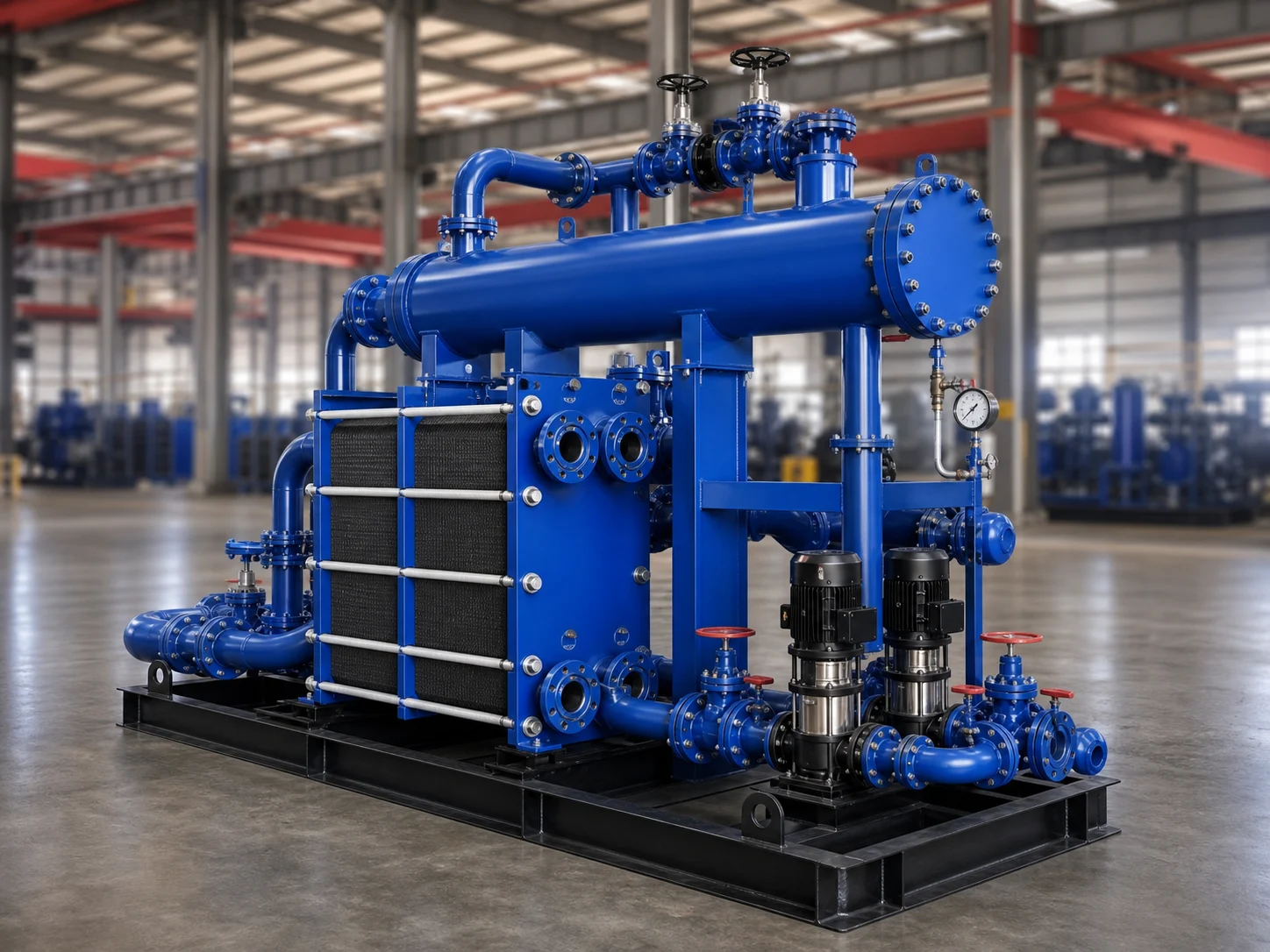
Steam enters the upper tubular section instead of directly striking the plate pack.
The tubular section takes the first temperature and pressure load.
Conditioned steam then enters the plate section for compact, efficient water heating.
Secondary water leaves at the selected supply temperature for heating or hot-water use.
Condensate must discharge freely to avoid water accumulation inside the steam side.
System Configurations Hengxin Can Supply
The same steam-water heat-transfer principle can be supplied as the core exchanger or as a complete heat exchange station with pumps, instruments and control cabinet.
Core Steam-to-Water Exchanger
Combined tubular and plate heat exchanger for projects that already have pumps, valves and control infrastructure. Selection focuses on steam condition, hot-water flow and target outlet temperature.
HX-JZ-Q Steam-Water Unit
Skid-mounted steam-water heat exchange unit including exchanger, circulation pump, make-up pressure pump, dirt separator, control cabinet, instruments, pipes and valves.
Intelligent Unattended Station
HX-JZ station upgraded with PLC, VFD, temperature and pressure sensors, and automatic control valves for supply temperature regulation, pressure control, fault protection and remote communication.
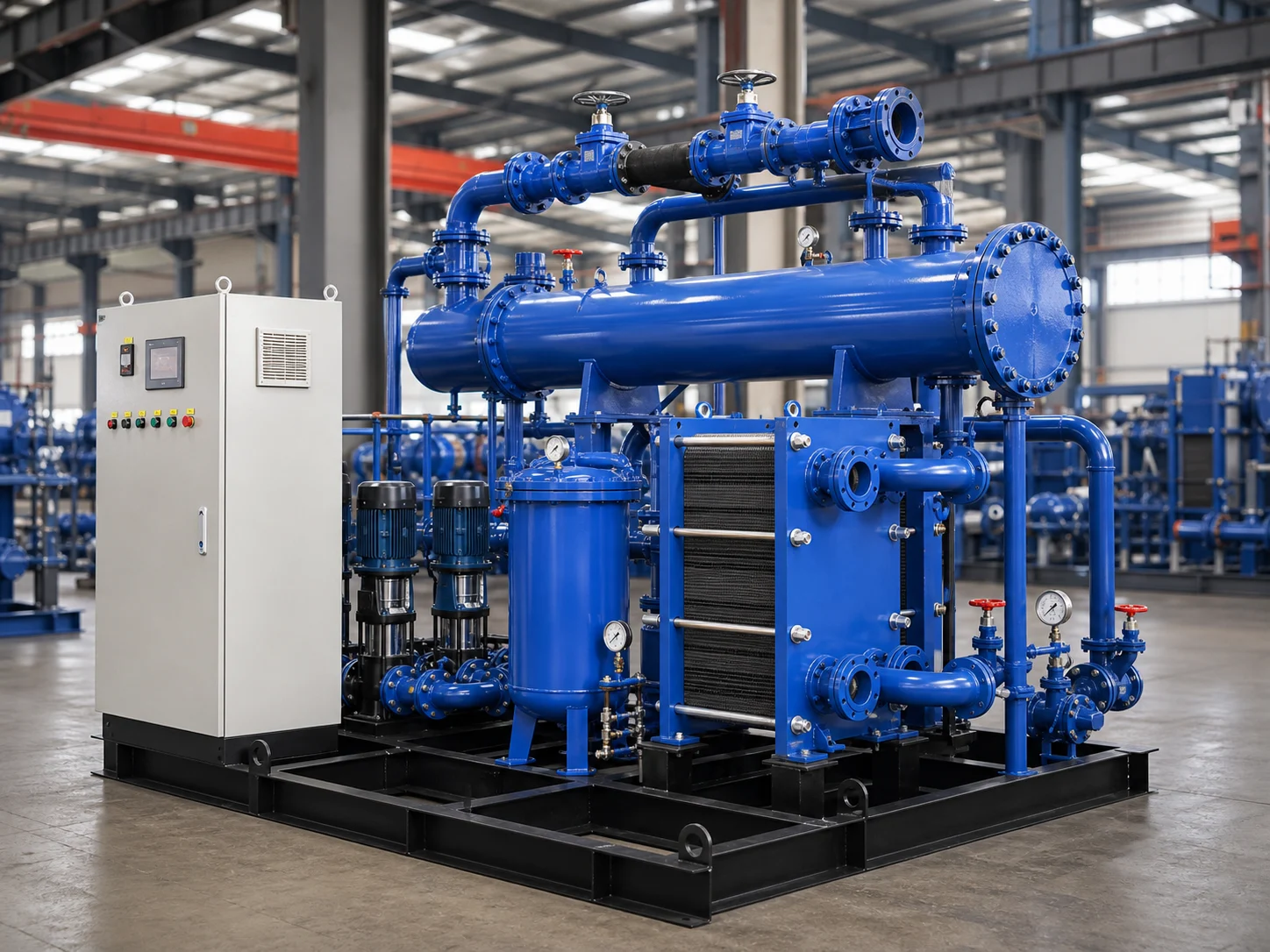
From Exchanger to Complete Heating Station
The HX-JZ series is described in the product sample as equipment for combined heat and power, residential district heating and urban centralized heating. The steam-water unit is one of the three HX-JZ station types, alongside water-water and intelligent unattended versions.
For heating networks, the intelligent control option can regulate the primary-side electric control valve, apply outdoor temperature compensation, use variable-frequency circulating pump control and support remote monitoring.
Applications for Steam-Heating Projects
The catalog places the product in projects where steam is the heating medium and hot water or another compatible medium must be produced reliably.
Residential District Heating
Steam-to-water conversion for community heating substations and secondary loop hot-water supply.
Hotels and Public Buildings
Heating and bathing hot water where steam is available and equipment-room space is limited.
Enterprise and Institutional Heating
Plant, campus, hospital or office heating systems requiring compact steam-water exchange.
Industrial Hot Water
Process hot-water preparation or compatible medium heating, selected by actual medium properties and water quality.
Selection Data Hengxin Needs Before Quotation
Steam-water projects are selected from actual working conditions. Send the operating data below so Hengxin can decide whether a core exchanger, HX-JZ-Q skid or intelligent unattended station is appropriate.
Technical Data and Catalog Notes
The values below are taken from the Hengxin product sample. Final selection depends on heat load, pressure drop, site layout and project standard.
| Item | Catalog Information | Engineering Meaning |
|---|---|---|
| Steam-to-water exchanger steam range | 0.1-0.8 MPa, 120-180°C; model table note: steam pressure 0.1-0.8 MPa and steam temperature 110-180°C. | Use this range as the first screening condition before detailed heat-transfer selection. |
| Pure plate exchanger limitation | When saturated steam pressure is above 0.2 MPa and temperature is above 130°C, gasket aging accelerates. | This is the reason for adding the upper tubular section before the plate exchanger. |
| Plate exchanger type | BR or BRB plate exchanger can be used; generally arranged as suspended type and single-pass assembly. | Plate section keeps compact footprint, efficiency and maintenance access. |
| Gasket material | EPDM rubber is listed for the plate heat exchanger sealing gasket. | Suitable gasket selection must follow actual temperature, medium and water quality. |
| HX-JZ station types | HX-JZ-S water-water unit, HX-JZ-Q steam-water unit, HX-JZ-W intelligent fully automatic unattended unit. | Defines whether the project is only an exchanger or a complete station package. |
| HX-JZ design envelope | Maximum design temperature <=300°C, maximum design pressure 2.5 MPa. | System-level design envelope; final equipment rating still follows project documents. |
| HX-JZ components | Heat exchanger, circulating pump, make-up pressure pump, dirt separator, electric control cabinet, automatic instruments, pipes and valves. | Useful for buyers comparing an exchanger-only quote with a skid-mounted station scope. |
Installation, Startup and Operation Points
The catalog gives specific operating cautions for steam-water service. These details matter because the equipment contains both a steam-side tubular section and a gasketed plate section.
Condensate Drainage
The steam-condensate outlet under the exchanger should discharge freely. Do not raise the condensate pipe in a way that leaves condensate accumulated inside the exchanger.
Startup Sequence
Start cold-water side circulation first, then open the steam valve slowly. This prevents thermal shock and avoids sending heat into a stagnant plate section.
Shutdown Sequence
Close the steam control valve first, then stop the water pump after the hot-side input is isolated.
Steam Inlet Strainer Logic
The catalog notes a multi-hole plate at the steam inlet flange. If impurities block the holes during early operation, open and clean the flange connection.
Bypass for Large Water Flow
For large water flow where the exchanger cannot pass the full volume or outlet temperature is too high, a bypass with regulating valve can mix part of the water stream.
Water Quality Review
Check chloride, hardness and scaling tendency. The plate section still needs correct material and cleaning planning, especially under poor water quality.
Manufacturing and Integration Capability
Steam-to-water equipment is not only a heat-transfer core. Hengxin can support the exchanger, skid integration, pressure boundary review, electrical control cabinet and station-level commissioning requirements.
Factory-Built Skid With Control Options
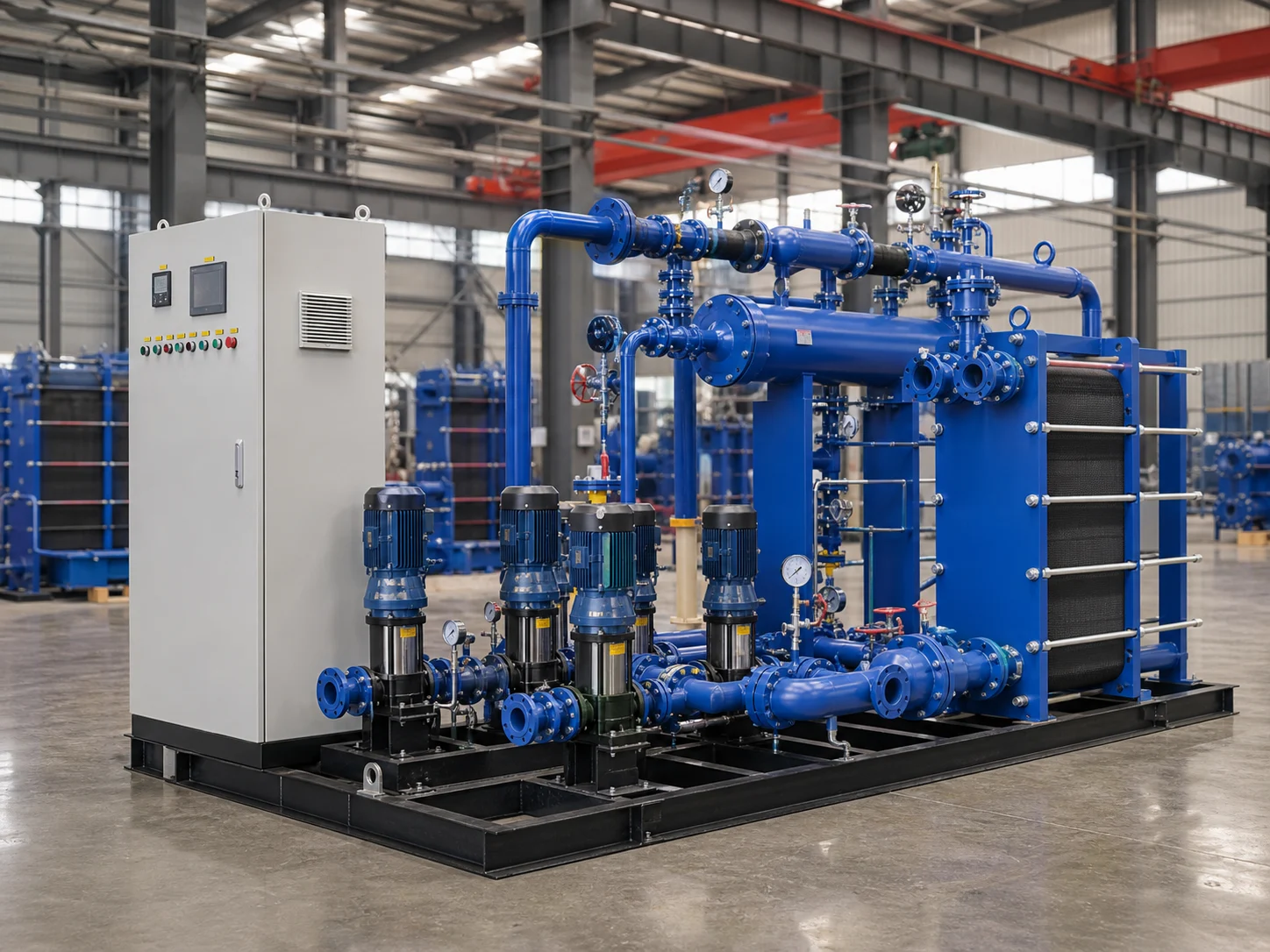
For HX-JZ systems, Hengxin integrates pumps, valves, instruments, dirt separator and control cabinet around the heat exchanger. Intelligent unattended options add PLC, VFD, temperature sensors, pressure sensors and automatic valves.
Remote monitoring options can transmit primary and secondary temperatures, pressures, flow, outdoor temperature, pump frequency and electric valve opening to a central management station or BAS.
FAQ
Common engineering questions about Hengxin steam-to-water heat exchangers and HX-JZ-Q steam-water heat exchange units.
What is the difference between this product and a normal plate heat exchanger?
A normal plate heat exchanger exposes the gasketed plate pack directly to the steam condition. Hengxin's steam-to-water exchanger adds a compact tubular section above the plate section, so steam first passes through the tubular exchanger before entering the plate exchanger.
Why does the system need a tubular section above the plate exchanger?
The catalog states that when saturated steam pressure is higher than 0.2 MPa and temperature is above 130°C, plate-exchanger gasket aging accelerates. The tubular section reduces the steam-side pressure and temperature load before the plate section, protecting the gasketed plate pack.
What steam pressure and temperature range is listed in the catalog?
The product overview lists suitable steam pressure of 0.1-0.8 MPa and steam temperature of 120-180°C. The model table note lists steam pressure of 0.1-0.8 MPa and steam temperature of 110-180°C.
Can Hengxin provide a complete steam-water heat exchange unit?
Yes. The HX-JZ-Q steam-water heat exchange unit can include the heat exchanger, circulating pump, make-up pressure pump, dirt separator, electric control cabinet, automatic instruments, pipes and valves.
Is this the same as a steam-to-hot-water heat exchanger?
Yes. In heating and domestic hot-water projects, buyers may call this a steam-to-hot-water heat exchanger or a steam-to-water heat exchange system. Hengxin uses a tubular steam section plus a gasketed plate section to heat secondary water from steam.
What is the design envelope for HX-JZ heat exchange units?
The Hengxin sample states that HX-JZ series units have a maximum design temperature of <=300°C and maximum design pressure of 2.5 MPa. Final project design should still follow the actual pressure-equipment documents and selected configuration.
What data is required for selection?
Send steam pressure and temperature, water inlet and outlet temperatures, water flow rate, heat duty, allowable pressure drop, condensate return condition, site layout, water quality, control requirements and whether you need only the exchanger or a complete skid-mounted station.
How should the condensate outlet be arranged?
The catalog cautions that the condensate outlet under the exchanger should discharge freely. Do not lift the condensate outlet piping in a way that causes condensate accumulation inside the exchanger.
What automation can be added for unattended operation?
The intelligent unattended station can add PLC, variable-frequency drives, temperature sensors, pressure sensors and automatic control valves. Functions include supply temperature regulation, pressure control, fault protection and remote communication.
Request a Steam-to-Water System Selection
Send your steam pressure, steam temperature, water inlet and outlet temperatures, flow rate, heat load, station scope and control requirements. Hengxin will review whether you need a core exchanger, HX-JZ-Q skid or intelligent unattended system.
For fast evaluation, include site layout limits and condensate return requirements. These affect nozzle orientation, drainage arrangement, control valve selection and maintenance clearance.