
Steam-to-Water Heat Exchange Station Solution
Plan a steam-source heating station around the exchanger, pumps, valves, instruments, control cabinet and condensate arrangement, instead of treating the exchanger as a loose component.
- For steam-to-hot-water heating, domestic hot water and equipment-room heat exchange stations.
- Supports core exchanger, HX-JZ-Q skid and intelligent unattended station decision routes.
- Connects steam condition, hot-water demand, drainage, control and delivery scope before quotation.
When a Steam-to-Water Station Route Fits
Choose this solution route when the heat source is steam and the project needs stable hot-water output, station-level integration, condensate review and practical operation sequence planning.
Decision Questions Before Equipment Selection
The product route depends on more than steam pressure and exchanger area. Hengxin first reviews the heating duty, water-side demand, condensate path and whether the site needs only a heat-transfer core or a complete station package.
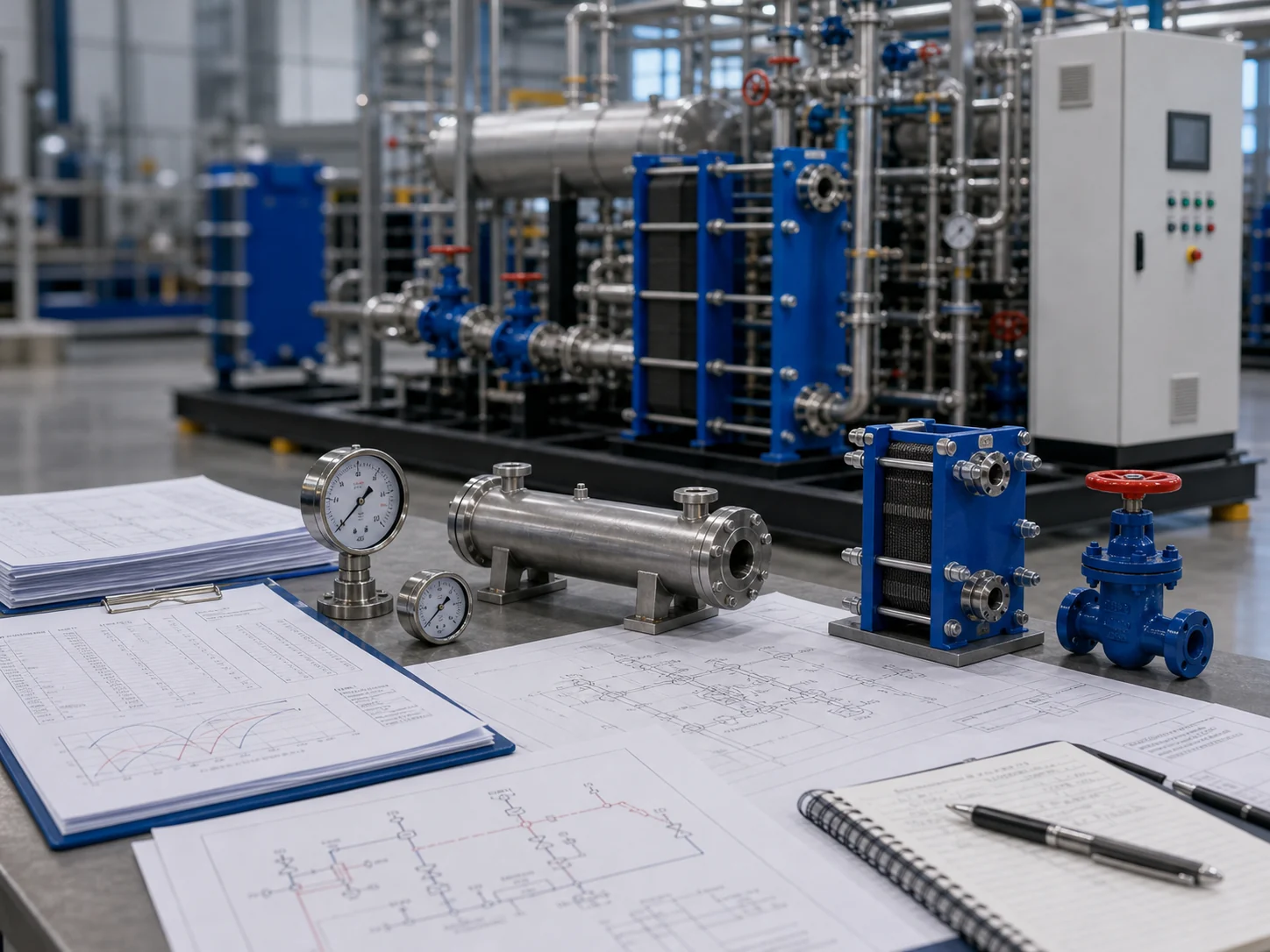
Define the Station Scope Before Comparing Prices
A steam-to-water project may need only the exchanger, or it may need the full station scope. The HX-JZ-Q route can include the exchanger, circulating pump, make-up pressure pump, dirt separator, control cabinet, instruments, pipes and valves according to the project boundary.
Core Exchanger
For equipment rooms that already have pumps, valves, control logic and steam-side accessories. Selection focuses on steam condition, water flow and target temperature.
Review steam-to-water exchanger
HX-JZ-Q Skid
For projects that need a coordinated steam-water unit with exchanger, pump group, dirt separation, instruments, control cabinet, piping and valves on a station package.
Intelligent Unattended Station
For projects requiring PLC, VFD, temperature and pressure sensors, automatic valves, alarm protection and remote communication around the steam-water station.
Steam-to-Water Station Configuration Checklist
Use this checklist to separate heat-transfer equipment from station integration, so the quotation scope is clear before engineering selection.
| Area | What Hengxin reviews | Why it matters |
|---|---|---|
| Steam side | Steam pressure, temperature, control valve, inlet strainer logic and condensate outlet path. | Steam impact, valve authority and condensate accumulation affect safe operation. |
| Heat exchanger | Combined tubular-plus-plate route, water-side duty and whether project conditions match catalog screening limits. | The steam-to-water product page explains why the tubular section conditions steam before the plate section. |
| Water side | Flow rate, inlet/outlet temperatures, circulation pump, make-up pressure and water quality. | Determines pump selection, plate/gasket review and long-term fouling risk. |
| Station package | Skid frame, pipes, valves, instruments, dirt separator and electric control cabinet. | Defines whether Hengxin supplies a core exchanger or a working heat exchange station. |
| Automation | Temperature control, VFD pump control, pressure control, alarms, remote monitoring and BAS interface. | Defines whether a normal station or intelligent unattended system is required. |
Catalog-backed references remain on the product pages: the steam-water product page lists steam pressure of 0.1-0.8 MPa and steam temperature around 120-180 deg C, while the HX-JZ station catalog scope includes design temperature up to 300 deg C and design pressure up to 2.5 MPa. Final design still follows actual project documents.
Project Data Needed for Station Selection
The fastest way to receive a useful recommendation is to send the operating data and the station boundary together.
Steam Conditions
Steam type, pressure, temperature, available flow, control valve requirement and condensate return condition.
Hot-Water Demand
Water inlet and outlet temperatures, flow rate, heat load, use case and seasonal load variation.
Pressure and Pressure Drop
Operating pressure, design pressure, allowable pressure drop, pump head limits and safety device requirements.
Station Scope
Exchanger only, skid-mounted station, pump group, make-up pressure, dirt separator, cabinet, valves and instruments.
Controls
Manual operation, outlet temperature control, PLC/VFD, outdoor compensation, alarms, BAS or remote communication.
Installation Site
Equipment-room dimensions, pipe directions, nozzle standard, maintenance clearance, lifting route and drainage elevation.
Controls, Condensate and Commissioning Questions
Steam-source stations need operating details that are often missed in exchanger-only quotations.
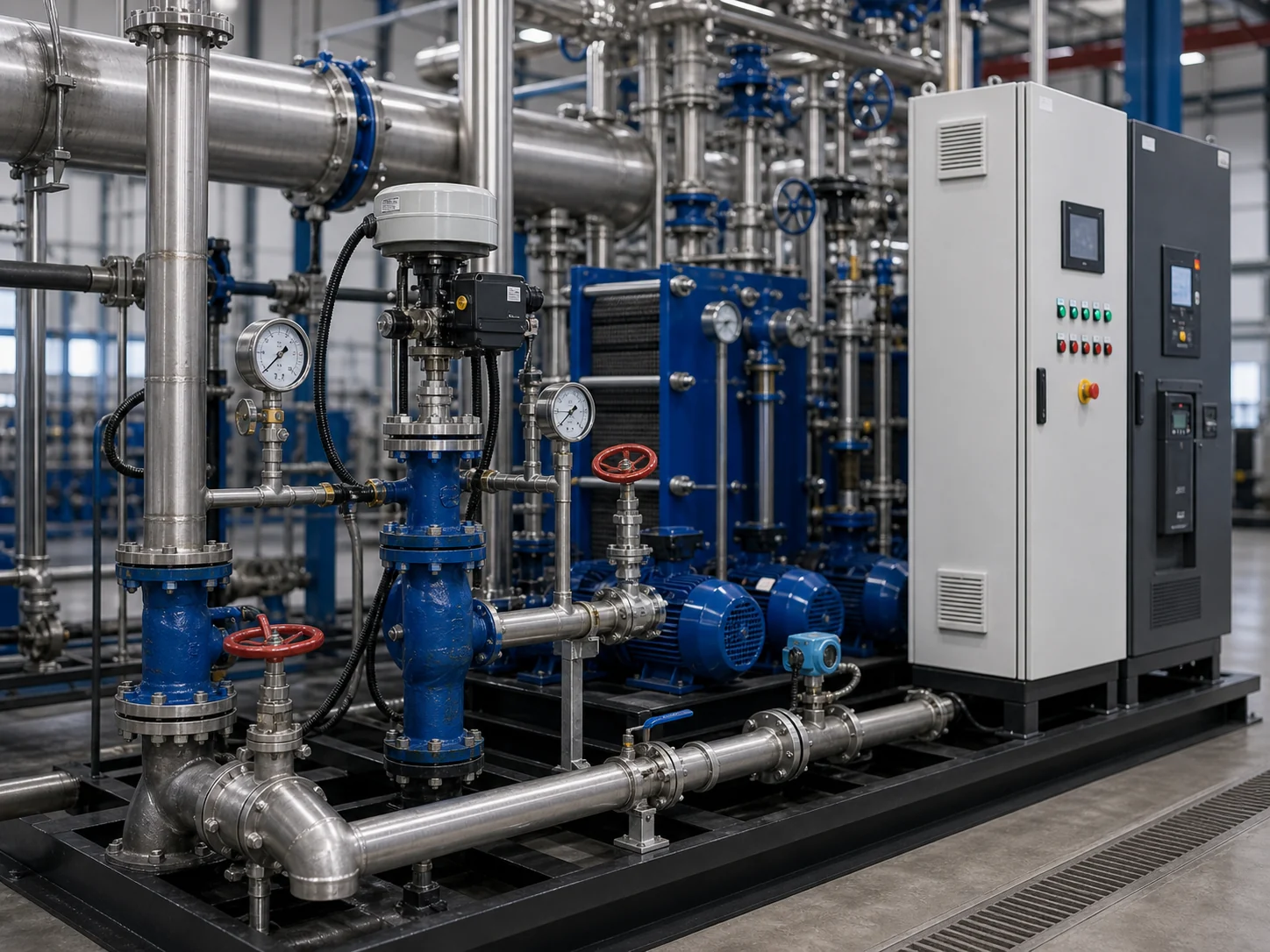
Questions to Confirm Before Production
Hengxin reviews the mechanical station and control layer together when the project requires automatic operation.
FAQ
Common project questions before selecting a steam-to-water heat exchange station.
Is this solution page the same as the steam-to-water product page?
No. The product page explains the steam-to-water exchanger itself. This solution page focuses on how the exchanger, pumps, dirt separator, valves, instruments, control cabinet and site constraints are reviewed as one station scope.
When should I ask for an HX-JZ-Q skid instead of only the exchanger?
Ask for the skid route when the project needs station components such as circulating pump, make-up pressure pump, dirt separator, electric control cabinet, automatic instruments, pipes and valves supplied together with the exchanger.
What information is needed before Hengxin can review the station?
Send steam pressure and temperature, water inlet and outlet temperatures, flow rate, heat load, working pressure, allowable pressure drop, condensate return condition, control scope and equipment-room layout.
Can the steam-to-water station be made unattended?
Yes. The intelligent unattended route can add PLC, VFD, temperature and pressure sensors, automatic valves, alarms and remote communication when the project requires automatic heat-station operation.
Why does condensate drainage matter?
The existing steam-water product content notes that condensate should discharge freely. If condensate is trapped by an unsuitable outlet arrangement, the station can face unstable steam-side operation and maintenance problems.
Request Steam-to-Water Station Review
Send your steam condition, hot-water demand, heat load, flow rate, working pressure, station scope and condensate arrangement.
Hengxin will review whether the project should use a core steam-water exchanger, HX-JZ-Q skid or intelligent unattended station route.