
High-Frequency Floating Coil Design for Steam-Water Duties
Hengxin's vertical floating coil heat exchanger is positioned in the product sample as a high-frequency vibration tubular steam-to-water exchanger. It is selected for heating, air-conditioning and domestic hot-water systems where steam is the heat source and scale resistance is a practical operating concern.
Dynamic Heat Transfer
The cantilever coil vibrates during operation, disturbing the water-side boundary layer instead of relying only on static tube-wall conduction.
Self-Descaling Behavior
The free-end coil can expand, contract and vibrate, helping loosen deposits that would otherwise build on a fixed heat-transfer surface.
Steam-Water System Fit
Catalog GZG-R and GZG-N examples are organized around saturated steam and hot-water outlet conditions for building heating and hot-water service.
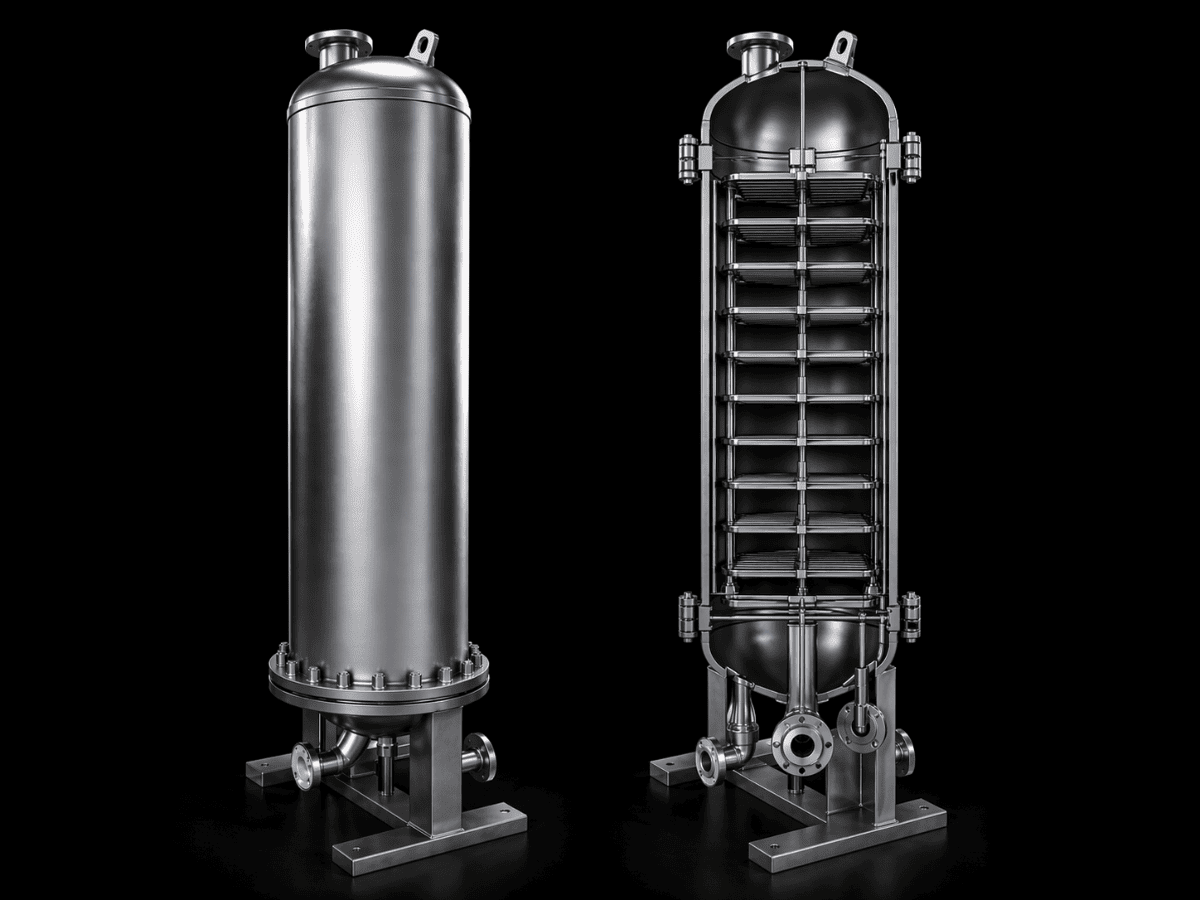
Vertical Equipment Layout
The vertical vessel layout keeps the coil bundle inside a pressure shell and leaves side nozzles and bottom condensate drainage accessible for site piping.
How the Floating Coil Heat Exchanger Works
The product sample describes the heat-transfer element as a cantilever copper coil. Steam flows inside the coil side, transfers heat through the tube wall, and condensate drains out from the lower condensate outlet. The water side surrounds the coil bundle inside the shell.
Boundary Layer Disruption and Automatic Scale Shedding
During steam-water operation, vibration of the coil bundle disrupts the external water-side boundary layer. This reduces the stagnant film that normally limits heat release from a static tube surface.
Because the coil is mounted as a cantilever with a free end, thermal expansion is less constrained than in a rigid fixed bundle. The sample links this vibration and free-end movement to the equipment's automatic descaling characteristic.
Typical Applications for Vertical Floating Coil Heat Exchangers
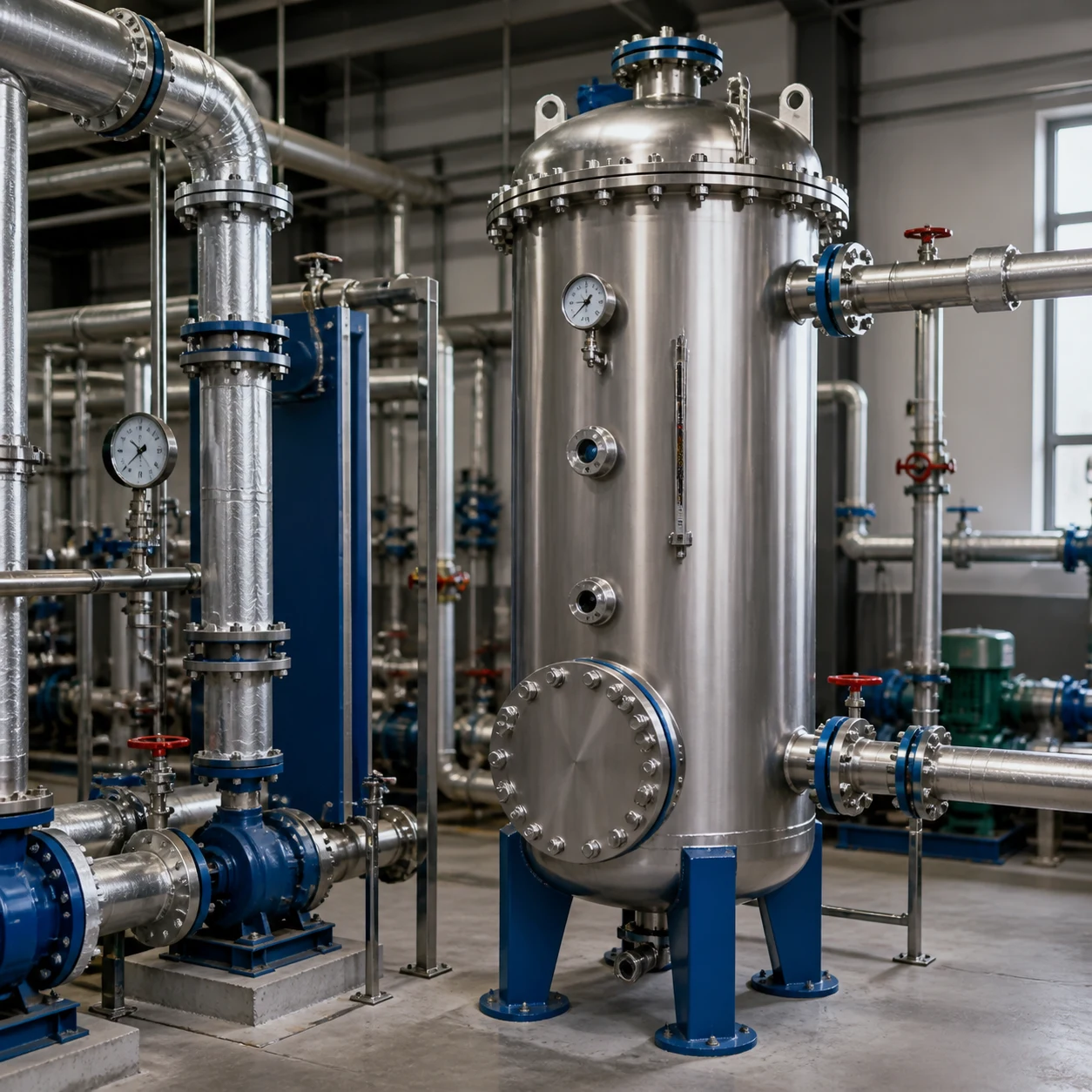
This equipment is not a general chemical process condenser. The catalog positions GZG-N / GZG-R high-frequency vibration tubular exchangers as preferred equipment for steam-to-water heating, air-conditioning and domestic hot-water systems.
Where the Vibration Coil Structure Adds Value
How to Select a Vertical Floating Coil Heat Exchanger
Selection should start from the actual steam condition, water flow and required outlet temperature, not from a model name alone. Hengxin engineers use the heat duty and site piping conditions to decide the GZG-R / GZG-N configuration and nozzle arrangement.
Define Steam Conditions
Confirm saturated steam pressure, available steam flow, inlet valve arrangement, condensate discharge route and whether steam dryness or pressure fluctuation may affect operation.
Confirm Water Duty
Provide water inlet temperature, required outlet temperature, circulating flow, water quality, system pressure and allowable pressure drop across the shell side.
Review Site Layout
Check vertical installation height, nozzle orientation, maintenance access, condensate return elevation, bypass need and control-valve position before final drawing approval.
Engineering Review Before Model Confirmation
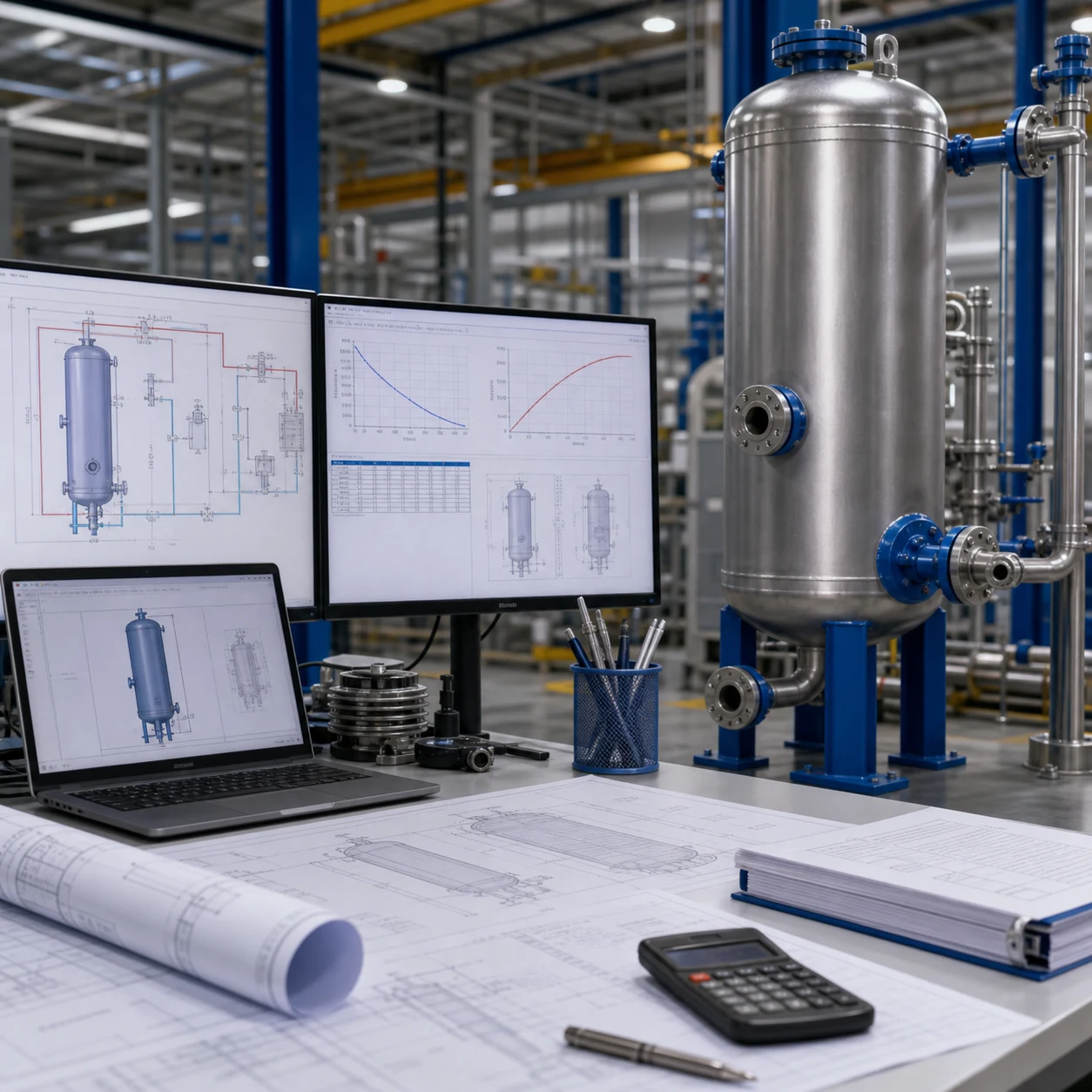
Hengxin confirms the steam-water heat duty, shell-side flow, outlet temperature target, condensate discharge route and site layout before recommending a GZG-R / GZG-N configuration.
The review connects catalog conditions with the real control-valve arrangement, nozzle direction and maintenance clearance, so the final drawing matches the machine-room installation instead of only matching a table row.
Do Not Mix the Product Families During Selection
GZG-R and GZG-N are the direct high-frequency vibration tubular heat exchanger families for steam-water duties. GZG-K and SWR / WWR tables refer to volumetric floating-coil storage-type variants; they are useful related references but should not replace the direct vertical floating coil selection unless storage volume is part of the project scope.
Technical Parameters From Hengxin Product Sample
The values below are summarized from the Hengxin product sample sections for floating coil heat exchangers. Final selection still depends on project calculation, pressure-vessel requirements, water quality and site piping conditions.
General Technical Scope
| Item | Catalog / engineering reference | Selection note |
|---|---|---|
| Product type | High-frequency vibration tubular heat exchanger; vertical floating coil steam-water equipment. | Used where steam heats water for heating, HVAC or domestic hot-water systems. |
| Heat-transfer element | Cantilever copper coil as described in the sample. | Actual material and pressure scope must be confirmed by project design and applicable standards. |
| Working mechanism | Vibration disrupts the water-side boundary layer; the free-end coil supports expansion and automatic descaling behavior. | Most relevant where scaling risk affects long-term heat-transfer performance. |
| Water temperature examples | GZG-R examples include 10 or 5 °C to 65 °C conditions; GZG-N examples include 70 °C to 95 °C conditions. | Use the actual inlet and outlet temperature rather than forcing the project into the sample condition. |
| Steam pressure examples | Small GZG examples show 0.2-0.4 MPa; larger GZG-N / GZG-K examples show 0.4-0.6 MPa saturated steam. | Control valve, condensate discharge and safety accessories must match the real steam supply. |
| Pressure drop reference | GZG performance tables show shell-side pressure drop of 0.002-0.008 MPa. | Confirm against pump head, bypass arrangement and allowable system resistance. |
Representative GZG-N Performance Rows
| Model | Heat-transfer area | Water condition | Hot-water flow | Saturated steam pressure | Heat load | Steam flow |
|---|---|---|---|---|---|---|
| GZG-N-3.41 | 3.41 m² | 70 °C to 95 °C | 9.60 / 16.12 m³/h | 0.2 / 0.4 MPa | 455 / 790 x 10³ kcal/h | 240 / 403 kg/h |
| GZG-N-10.30 | 10.30 m² | 70 °C to 95 °C | 28.96 / 48.72 m³/h | 0.2 / 0.4 MPa | 1374 / 2388 x 10³ kcal/h | 724 / 1218 kg/h |
| GZG-N-14.94 | 14.94 m² | 70 °C to 95 °C | 94 / 102 / 115 m³/h | 0.4-0.6 MPa | 4701 / 5062 / 5707 x 10³ kcal/h | 2350 / 2550 / 2875 kg/h |
| GZG-N-39.40 | 39.40 m² | 70 °C to 95 °C | 197 / 229 / 260 / 285 m³/h | 0.4-0.6 MPa | 9471 / 11009 / 12500 / 13700 x 10³ kcal/h | 4925 / 5725 / 6500 / 7125 kg/h |
Source note: values are taken from the OCR text of the Hengxin product sample. The scanned table contains some OCR noise, so final quotations should be checked against the original sample page or engineering calculation sheet before commercial use.
Installation, Operation and Maintenance Points
The product sample gives practical operation notes for the steam-water exchanger section. These points are important because poor condensate drainage, water hammer or blocked inlet buffering can reduce steam flow and affect heat transfer.
Steam Inlet and Condensate Drainage
Use a stop valve or gate valve suitable for the higher steam temperature at the steam inlet. Do not add a steam trap or raise the drain pipe at the lower condensate outlet in a way that prevents free condensate discharge.
Start and Stop Sequence
Start the circulating water pump on the cold-water side before opening steam. When stopping, close the steam valve first and then stop the water pump to reduce thermal shock and operating instability.
Steam Carryover in Condensate
If discharged condensate contains a large amount of steam, reduce the steam inlet valve opening. After adjustment, avoid frequent operation of this valve and use the cylinder or upstream valve for routine shutoff where appropriate.
Inlet Buffer Plate Cleaning
The sample notes a perforated plate on the steam inlet flange for buffering. If pipeline debris blocks the holes during early operation, remove the inlet flange and clean it during the first one or two days of commissioning.
When a Bypass May Be Needed
If the heated-water flow is too large for the exchanger to pass fully and the outlet water temperature becomes too high, add a bypass line with an intermediate valve. Part of the water can bypass the exchanger and mix with the heated outlet water so the final supply temperature reaches the required value.
Engineering Support From Selection to Delivery
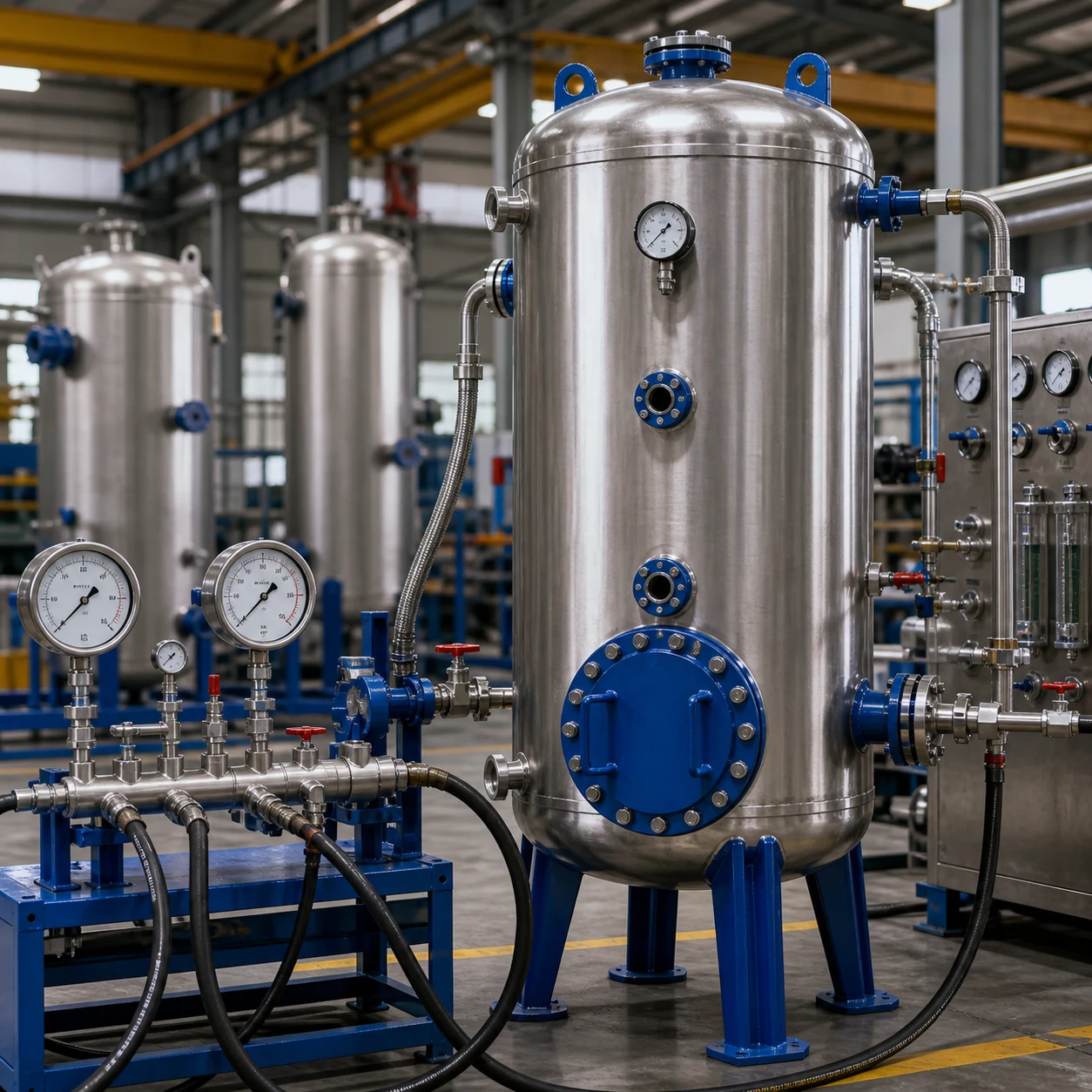
A floating coil heat exchanger still has to be engineered as real pressure equipment. Hengxin reviews the steam-water duty, material, shell/nozzle layout, control-valve arrangement and condensate discharge route before finalizing drawings and quotation.
What Hengxin Confirms Before Manufacturing
FAQ
Common buyer questions about Hengxin vertical floating coil heat exchangers, including working principle, selection data, model families and operation notes.
What is a vertical floating coil heat exchanger?
It is a vertical high-frequency vibration tubular steam-to-water exchanger. The heat-transfer element is a cantilever coil inside the shell, and vibration during operation helps improve heat transfer and reduce scale attachment.
How is it different from a shell-and-tube heat exchanger?
A conventional shell-and-tube exchanger is selected mainly by tube bundle, tube sheet, baffle and shell-side arrangement. The floating coil product uses a cantilever coil with vibration and free-end movement, so the selling point is steam-water heating with boundary-layer disruption and self-descaling behavior.
What information is required for selection?
Provide saturated steam pressure and available steam flow, water inlet and outlet temperature, hot-water flow, system pressure, allowable pressure drop, water quality, installation height, nozzle orientation and condensate return conditions.
What catalog model families are involved?
For the direct high-frequency vibration floating coil exchanger, the page focuses on GZG-R and GZG-N. GZG-K and SWR / WWR tables refer to volumetric floating-coil storage variants and should be treated as related but different configurations.
Why is condensate drainage important?
If condensate cannot drain freely, water can accumulate inside the exchanger and reduce the amount of steam entering the coil, which directly affects heat transfer. The sample specifically warns against adding a trap or raising the drain pipe at the lower condensate outlet.
Which steam conditions should be checked before quotation?
The catalog examples show saturated steam pressure ranges from 0.2 to 0.6 MPa across GZG duties. Hengxin still needs the actual steam pressure, steam flow, dryness and control-valve arrangement before confirming the exchanger size.
Can it be used for HVAC and domestic hot-water systems?
Yes. The product sample positions GZG-N / GZG-R high-frequency vibration tubular exchangers for steam-water heating, air-conditioning and domestic hot-water systems where stable heat transfer and scale control are important.
What operation sequence should be followed during start-up?
Start the cold-water circulating pump first, then open the steam side gradually. During shutdown, close steam first and then stop the water pump. This avoids dry heating and helps keep condensate discharge and heat transfer stable.