
District Heating Heat Exchange Solution
Plan heat exchange equipment and station scope for municipal heating, residential communities, campus energy stations and primary-to-secondary heating loops.
- Reviews primary and secondary loop conditions before exchanger structure is selected.
- Connects shell-and-tube heaters, steam-water routes, water-water stations and HX-JZ integration.
- Defines pumps, valves, instruments, dirt separation, control cabinet and automation scope early.
Start From Primary and Secondary Loop Conditions
A district heating solution is selected from the heat source, secondary demand, water quality, pressure separation and station control boundary. The exchanger type is a result of that review, not the starting assumption.
What the Station Must Achieve
The solution should transfer heat from the primary network or heat source to the secondary building loop without mixing the two systems, while maintaining stable supply temperature, pressure and operation during changing heat load.
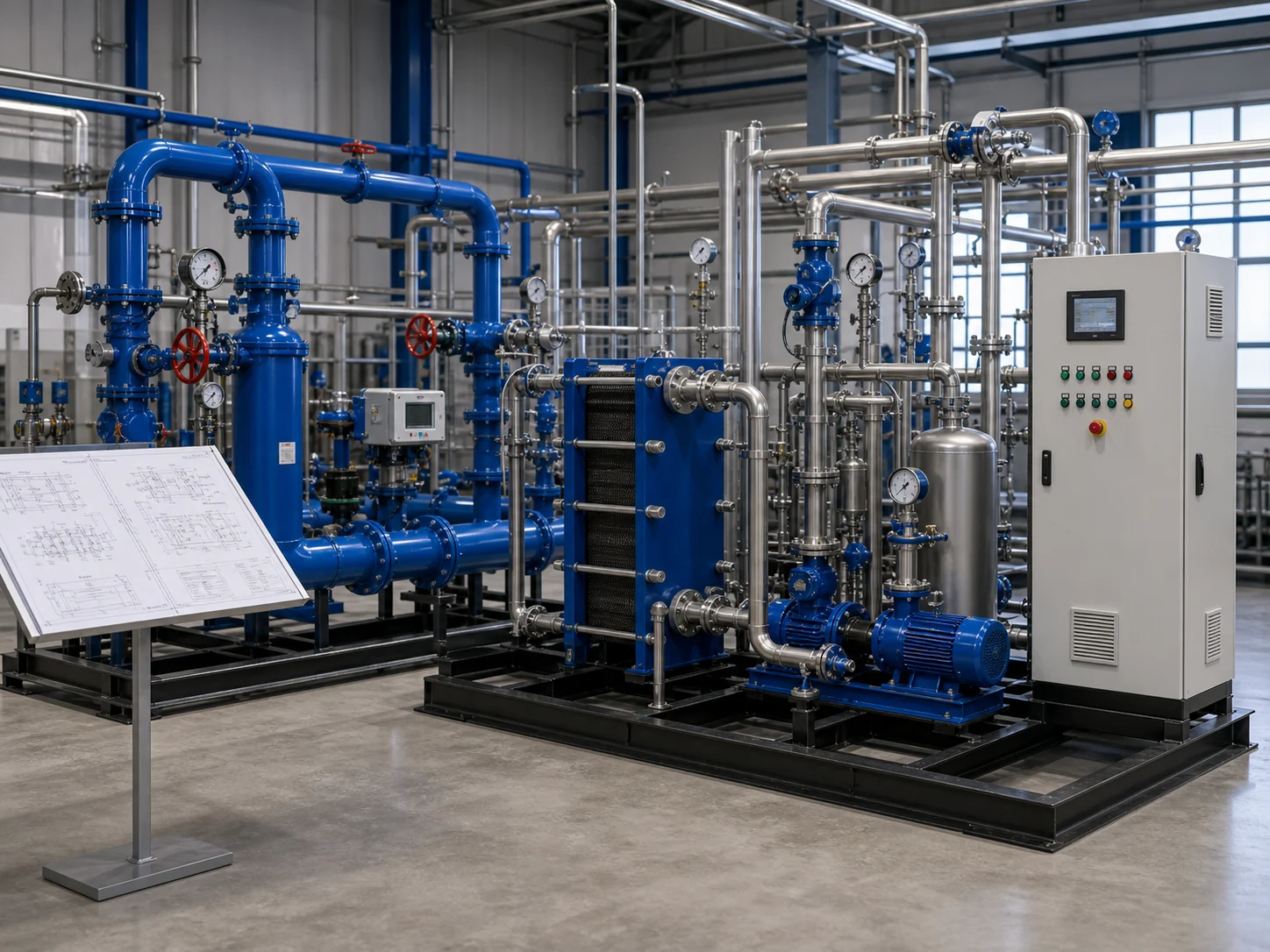
Choose the Equipment Route for the Heat Source
District heating projects can use different Hengxin equipment routes depending on primary medium, pressure, fouling, footprint and station integration requirements.
Shell-and-Tube Heat Network Heater
For pressure-vessel heat transfer, larger flow, pressure separation, fouling review and mechanical cleaning access.
Review district heating exchanger
Steam-to-Water Station
For steam-source district heating or building heat stations where condensate drainage, steam valve control and water circulation sequence must be reviewed.
Water-to-Water Station
For primary network water serving a secondary loop through plate exchangers, circulation pumps, make-up pressure and cabinet control.
District Heating Station Scope
For quotation comparison, separate the heat exchanger from the station package. The HX-JZ catalog scope can include exchanger, circulating pump, make-up pressure pump, dirt separator, electric control cabinet, automatic instruments, pipes and valves.
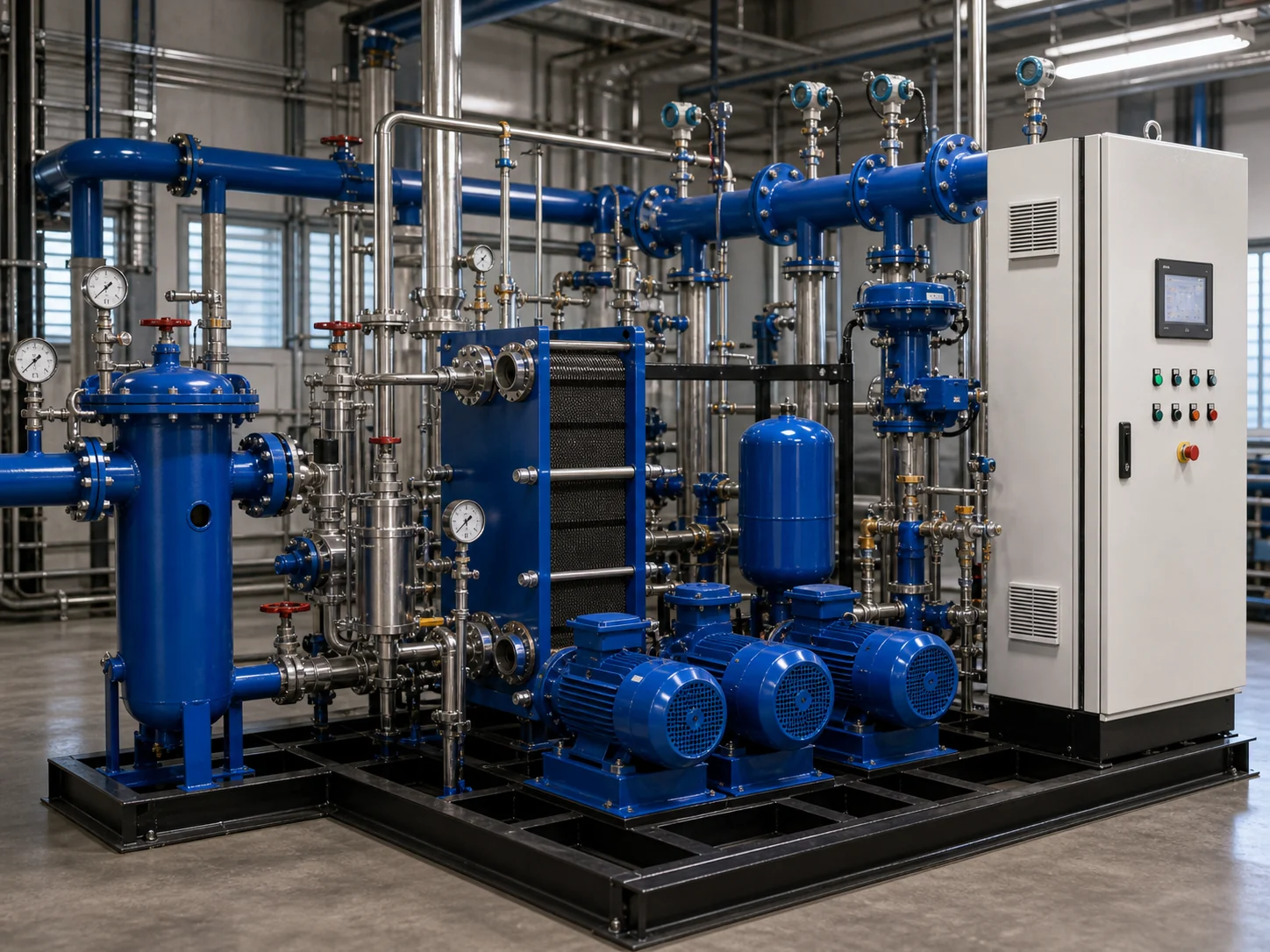
Controls Are Part of the Solution
Heating stations often need secondary supply temperature regulation and pump control, not only exchanger surface area. The intelligent route can add PLC, VFD, sensors, automatic valves, alarms and remote communication.
Project Data Needed for District Heating Selection
Nominal heat-transfer area is not enough. Hengxin needs the loop data, pressure boundary, station layout and control scope before a practical recommendation can be made.
Heat Load
Design heat duty, peak load, turndown range, heating profile and whether the exchanger is base-load, peak-load or standby equipment.
Primary Side
Medium, inlet and outlet temperatures, flow rate, working pressure, design pressure and allowable pressure drop.
Secondary Side
Supply and return temperatures, circulating flow, static pressure, make-up system and outlet temperature stability requirement.
Water Quality
Hardness, suspended solids, chloride, scaling tendency, corrosion risk and planned dirt separation or filtration.
Station Layout
Equipment-room dimensions, pipe entry direction, nozzle standards, maintenance clearance, lifting and drainage constraints.
Automation
Temperature control, outdoor compensation, pump VFD, heat meter, pressure transmitter, alarms and remote monitoring needs.
Engineering Delivery and Quality Review
The district heating exchanger is a pressure boundary inside the station, so project delivery should include mechanical review, manufacturing quality and station documentation.
| Delivery point | Review focus | Related Hengxin page |
|---|---|---|
| Heat exchanger body | Structure route, pressure, temperature, material, tube bundle cleaning access and inspection documents. | Shell-and-Tube Heat Exchanger |
| Station skid | Exchanger, pumps, dirt separator, valves, instruments, cabinet, pipe direction and equipment-room clearance. | Water-to-Water System |
| Steam-source route | Condensate drainage, steam valve control, startup sequence and water-side circulation. | Steam-to-Water System |
| Unattended control | PLC, VFD, sensors, regulating valves, alarm points, remote data and BAS communication. | Intelligent Unattended System |
Catalog-backed values such as shell-and-tube pressure scope, HX-JZ station design boundary and material options are kept on the product pages. The solution review should not replace final pressure-vessel calculation or project documentation.
FAQ
Common project questions before selecting a district heating heat exchange solution.
Is this a product page or a solution page?
It is a solution page. It helps buyers decide the district heating route, station scope and project data before moving to product pages such as district heating heat exchanger, shell-and-tube exchanger, water-water system or intelligent unattended system.
Which exchanger type is used in a district heating station?
It depends on the heat source, pressure, fouling risk, heat load and station scope. Hengxin may review shell-and-tube heat network heaters, steam-water exchangers, water-water stations or a complete HX-JZ system.
What data should be sent for district heating selection?
Send heat load, primary and secondary media, inlet and outlet temperatures, flow rates, operating and design pressures, allowable pressure drop, water quality, installation layout, station scope and automation requirements.
Can Hengxin supply a complete district heating station?
Yes. According to project scope, Hengxin can review a station package that includes the heat exchanger, circulating pump, make-up pressure pump, dirt separator, control cabinet, instruments, pipes and valves.
When is intelligent unattended control needed?
It is considered when the station requires automatic supply temperature control, pump frequency control, make-up pressure control, alarms, overpressure protection, remote monitoring or central management station communication.
Request District Heating Solution Review
Send primary and secondary temperatures, flow rates, heat load, pressure, allowable pressure drop, water quality, station scope and automation requirements.
Hengxin will review the exchanger route and station integration boundary before preparing a technical suggestion.