
Heat Exchanger Selection Guide
Use this guide to compare common heat exchanger routes, prepare project data and decide when Hengxin should review a standalone exchanger, a steam-to-water unit, a water-to-water station or an intelligent unattended heat exchange system.
- Start from media, heat load, temperature program, flow rate and allowable pressure drop.
- Match the exchanger structure to fouling, pressure, water quality, maintenance access and station scope.
- Use product pages for technical details after the equipment route is clear.
Select by Duty, Not Only by Product Name
A heat exchanger is selected from the working condition first. The same application name can lead to different equipment when the pressure, steam condition, fouling risk, water quality, installation space or automation scope changes.
Three Questions Before Comparing Models
Before Hengxin recommends a product route, the project should define what heat must be transferred, what media are involved and what boundary conditions the equipment must satisfy.
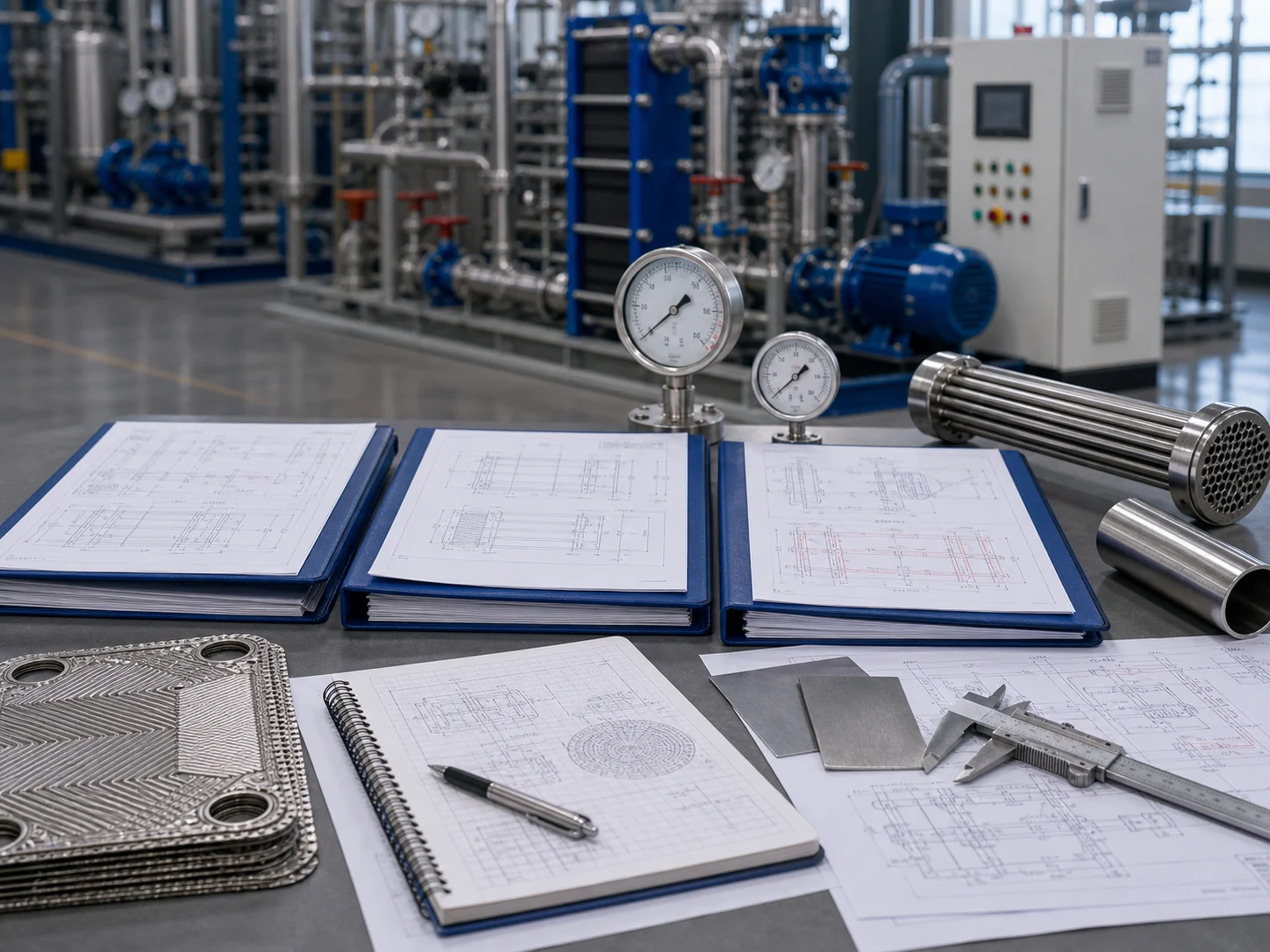
Project Data Hengxin Needs Before Sizing
Nominal heat-transfer area alone is not enough for reliable selection. Send the data below when available; if some items are unknown, describe the application and Hengxin can identify the missing points.
Media on Both Sides
Hot-side and cold-side media, steam or water source, concentration, solids, viscosity, corrosion risk and whether phase change occurs.
Temperature Program
Inlet and outlet temperatures for both sides, supply temperature target, seasonal variation and startup or shutdown conditions.
Flow Rate and Heat Load
Design flow rate, peak load, turndown range, operating schedule and whether the exchanger works as base-load, peak-load or standby equipment.
Pressure and Pressure Drop
Operating pressure, design pressure, pressure differential between media, allowable pressure drop and pump head limitations.
Water Quality and Materials
Chloride, hardness, scaling tendency, suspended solids, cleaning method and any required stainless steel or gasket material preference.
Installation and Scope
Room layout, nozzle direction, maintenance clearance, control cabinet, pumps, valves, instruments, condensate handling and document requirements.
Compare Common Hengxin Equipment Routes
The table is a decision guide. Final selection must still be checked against actual heat load, media, pressure, material and project documents.
| Equipment route | When it is usually considered | Key decision points | Product page |
|---|---|---|---|
| Gasketed plate heat exchanger | Heating, HVAC, domestic hot water, oil cooling and compatible liquid duties where compact footprint and cleanable plates matter. | Media compatibility, plate material, gasket material, flow balance, pass arrangement and water quality. | Gasketed Plate |
| Shell-and-tube heat exchanger | Pressure-vessel duties, larger flow rates, higher mechanical strength needs, fouling review or heavier industrial media. | Floating head, fixed tube sheet, U-tube or packed gland structure; thermal expansion, cleaning access, pressure and material. | Shell-and-Tube |
| Spiral threaded tube heat exchanger | Compact tubular heat transfer for demanding process heating, cooling, condensation and heat recovery duties. | Flow-induced vibration, thermal stress, asymmetric flow, material and process-side cleaning requirements. | Spiral Threaded Tube |
| Vertical floating coil heat exchanger | Steam-water hot water duties where a floating or vibrating coil structure is preferred for the selected product family. | Steam condition, condensate drainage, coil family, installation constraints and pressure-equipment documentation. | Vertical Floating Coil |
| Storage-type heat exchanger | Domestic hot water or bathing systems where stored water helps handle peak demand and operating profile variation. | Storage volume, heating source, peak flow, recovery requirement, water quality and installation space. | Storage-Type |
| Heat exchange station or unit | Projects that need exchanger, pumps, make-up pressure, dirt separator, instruments, valves and control cabinet as one station scope. | Steam-water or water-water route, automation level, pump control, station layout and commissioning boundary. | Steam-to-Water / Water-to-Water |
Catalog-backed values are kept on the product pages. For example, Hengxin pages describe HX-JZ station components and the steam-water exchanger structure, but the final design still follows the actual project duty and pressure-equipment documents.
Standalone Exchanger or Complete Heat Exchange Station?
A buyer may need only the heat exchanger core, or the broader station package. The station route is usually selected when pumps, valves, instruments, dirt separator, control cabinet and site integration must be supplied together.
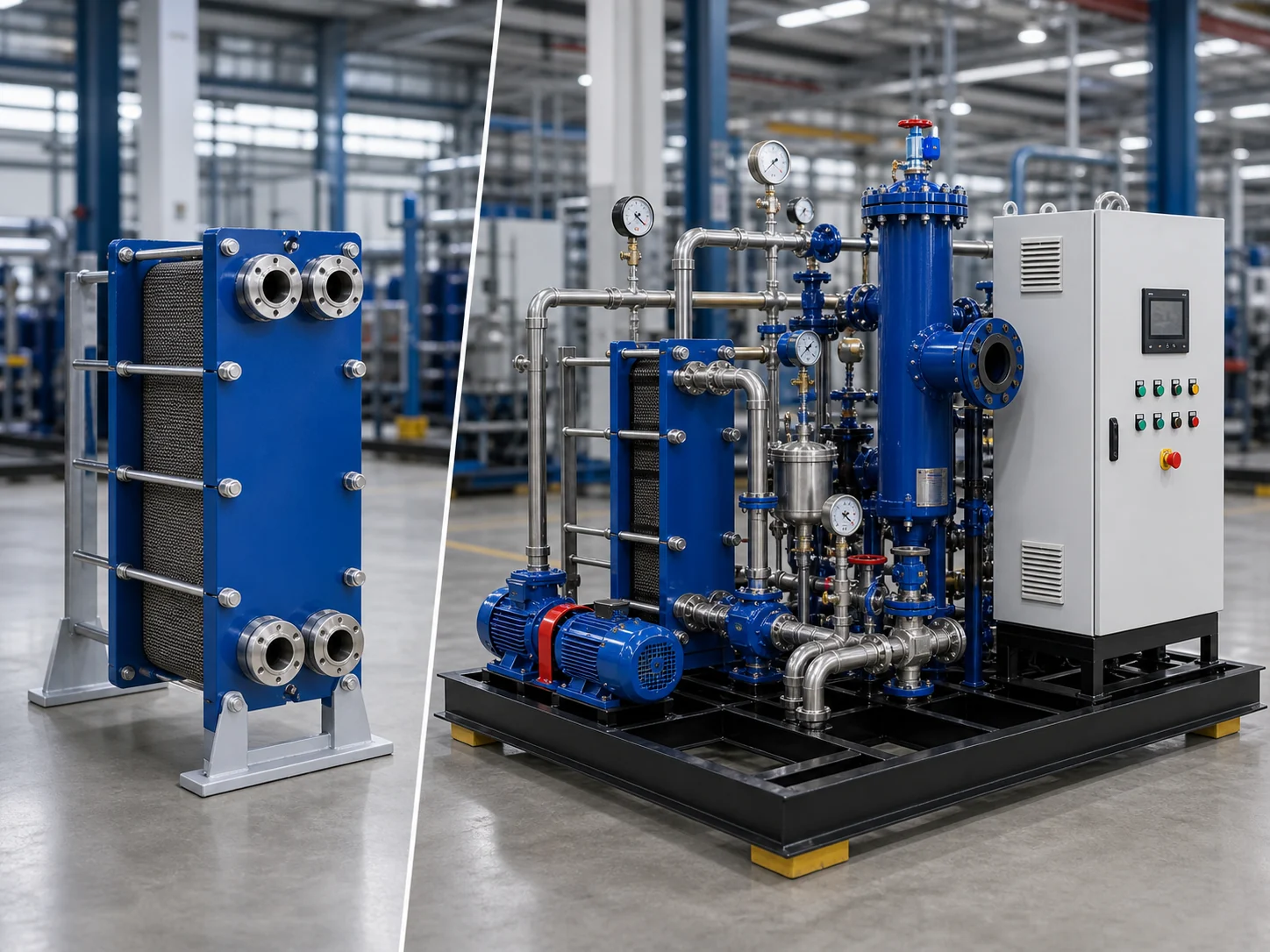
Choose the System Route When Scope Matters
Hengxin’s HX-JZ heat exchange station material covers steam-water, water-water and intelligent unattended station routes. The equipment route depends on the primary heat source and the control scope required by the project.
Material, Water Quality and Pressure Boundary
Material selection is not a catalog checkbox. It depends on medium chemistry, operating temperature, pressure, corrosion risk, cleaning method and expected maintenance route.
For Plate Exchangers
Hengxin product materials reference SUS304 and optional SUS316L plate materials, plus NBR and EPDM gasket options. Final selection should consider medium, temperature, water quality and chemical compatibility.
For Pressure-Vessel Equipment
Shell-and-tube and heat network heater selection must review design pressure, design temperature, material grade, nozzle standard, inspection documents and cleaning access before final quotation.
Selection Workflow From Inquiry to Quotation
The fastest way to get a useful answer is to send enough project data for Hengxin to identify the equipment route before discussing model details.
Return to Engineering Resources for related selection and project-planning pages.
Heating, cooling, domestic hot water, steam-water station, district heating or process heat recovery.
Media, flow, temperatures, pressure, pressure drop, water quality and layout constraints.
Plate, shell-and-tube, tubular, storage, station or intelligent unattended system.
Core exchanger, skid, pumps, valves, instruments, control cabinet and documentation boundary.
Hengxin prepares technical suggestions and quotation details for the confirmed configuration.
FAQ
Common questions buyers ask before choosing a Hengxin heat exchanger or heat exchange station route.
What information is needed to select a heat exchanger?
Hengxin usually needs the hot-side and cold-side media, inlet and outlet temperatures, flow rates, heat load, working and design pressure, allowable pressure drop, water quality, material requirements, installation layout and whether the project needs only a heat exchanger or a complete station.
How do I choose between a plate exchanger and a shell-and-tube exchanger?
A gasketed plate exchanger is often considered when compact size, high heat-transfer density and disassembly for cleaning are important. A shell-and-tube exchanger is reviewed when pressure-vessel construction, heavier media, larger flow, fouling control, thermal expansion or custom material requirements dominate the decision.
When should I choose a complete heat exchange station?
Choose a station route when the project needs more than the exchanger core. HX-JZ heat exchange stations can include the exchanger, circulating pump, make-up pressure pump, dirt separator, electric control cabinet, instruments, pipes and valves according to project scope.
Can Hengxin select equipment if some data is missing?
Yes, but the first response may be a technical data request rather than a final quotation. If exact flow or heat load is not available, send the application, source side, target outlet temperature, operating pressure, site scope and any drawings or old equipment nameplates.
Why is water quality important for selection?
Water quality affects plate material, gasket selection, fouling risk, cleaning interval, tube structure and whether a dirt separator or filter should be included in a station. Chloride, hardness, suspended solids and scaling tendency should be reviewed before final material confirmation.
Request Heat Exchanger Selection Support
Send your application, media, temperatures, flow rate, heat load, pressure, pressure drop, water quality and required project scope. Hengxin will review the suitable exchanger route and what data is still needed before quotation.
For replacement projects, include photos, nameplate information, existing drawings or the current exchanger model if available.